
Prose
St. Cuthbert's Spyglass
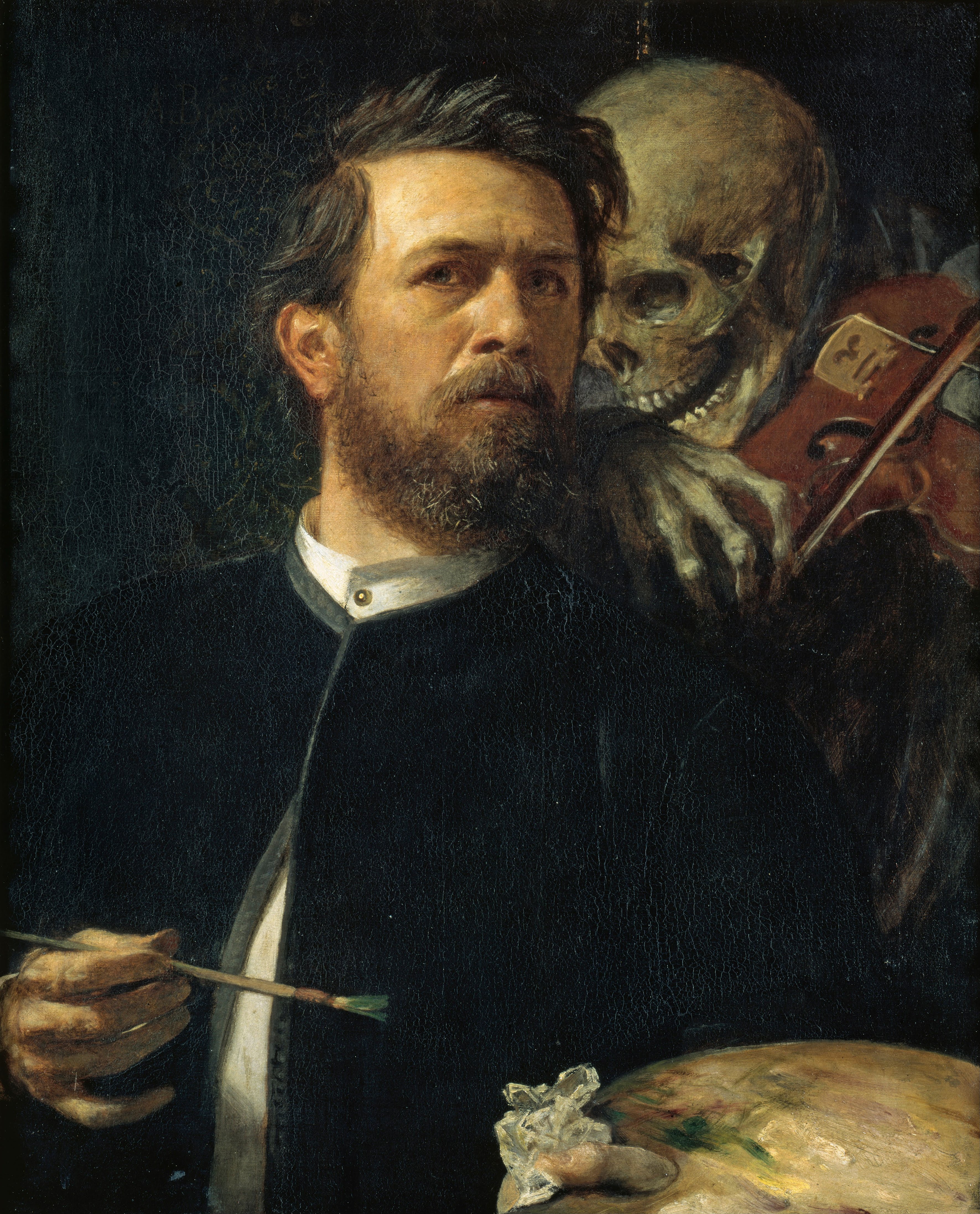
IT HAD BEEN their youthful destination, on summer afternoons, when the cathedral by the weir took them into its cool shadows for Evensong. They'd moved as young men a short train journey north, from industrial town to cathedral town, finding work, falling in love and starting lives both puzzling and rewarding in equal measure. Now Arthur was a junior fellow at St. Cuthbert's College, Peter six months in his grave.
He stood, torn, at the churchyard gate.
To his right, up one of the shallower of the slopes for which the city was known, lay a bookshop, an ironmonger's and curio emporium, the café where he took many of his meals. Eating in Hall, like worshipping in Chapel, was a duty undertaken only when strictly necessary; most often when he imagined his head of department might be in attendance. To the left, a long way down, was the unhallowed corner where they buried his friend. It had been almost a month since his last visit, so he turned in.
Abbey had left, fleeing scandal for a town somewhere in the south where no one knew her, and she could assume the mantle of a young widow. Together with Vivienne, they had spent almost the whole of their time together, yet she left no forwarding address. He'd tried tried to be angry, but couldn't. On the sloping path towards the yew trees, choked with unraked debris, he thought of her again and wished them well. He knew he would never see her again.
At Peter's grave he leaned over and laid a hand on the stone, kicked away a thick accumulation of drifted leaves. His fingers took nothing from the blunt incisions. A few more visits and their sharpness would blur with time, or green mould; a few dozen and they'd be illegible like the rest, wiped into oblivion by the passage of indifferent years.
'Ah, Peter,' he said.
The college clock, distinctive in its pitiless clarity, struck five. Through the watery evening he turned back for town. Perhaps an early dinner, another crack at Vivienne — he sought, and had thus far failed, to warm her current demeanour — before turning in to his room for a few pages, and sleep.
He had enough to read, and was on the verge of entering the café, when the curio shop caught his eyes. Curious, indeed; it was fully lit this damp autumn evening, the proprietor visible between two tall bakelite lampshades behind the counter, head bent intently over some object or other. He'd never thought to go in before, his room tending towards the spartan (and his landlady securing most of what he earned) but the idea of another meat pudding and weak pot of tea did nothing to lighten his mood. Instead, he jangled through the doorway, removing his hat and shaking out his overcoat on the mat.
'Good evening,' said the man behind the counter.
'Evening,' Arthur said with a smile.
'Are you looking for anything in particular?'
'No, no — just looking, you know.'
'Very good, then.'
The man nodded and returned to his package, which Arthur now saw to be something of a dull silver hue positively enrobed in layers of bone-coloured tissue. He looked away and strolled the close confines of the shop for a few minutes. There was half of a fine set of carved bookends, in a griffin shape, but the man was asking two guineas — two guineas! — and for only one end of the bookshelf! Besides, it was about a fifth of his weekly wage, and such a purchase would doubtless only cause further deteriorations in his rapport with Vivienne.
The rest of the place was of similar, slightly crooked interest, and priced to match. He'd made a second round when he realised the shop had fallen silent. He looked up, startled. The proprietor had lifted whatever-it-was from the nested box, set the wrapping aside and was peering down at the thing. It lay in a round of dull gleams beside the cash register. Arthur walked across, peering himself over the man's shoulder. It made no difference.
'I am not entirely sure what it is, sir.'
'Arthur — Arthur Saltwick, from the college?'
'What?'
'I'm just up the road, though I've never stopped in.'
The man took off his glasses and scrunched his fingers into both eyes, shook them out.
'I do apologise, sir. Raines — Walter Raines. I have been here some years, but never had the pleasure of making your acquaintance.'
'Oh, I haven't been here all that long!' They shook hands, made the brief deferential smiles of newly-middle class fellows marking out territory. 'So what is it?'
'I can't rightly say, but it is certainly — interesting.'
He lifted up the object into the light.
It was a rounded thing, by shape, but not spherical; the top attached by pushing, and evidently slid closely down the sides of the cylinder, of about two inches depth, both smoothly and without sound. He tugged at the slight scalloping of its silver edge and the top of the case came open with a sigh. Inside, a coat of racing-green flocking, something which fitted the container almost to its edge, the rounded parts of a similar boney hue to the discarded wrappings, and the centre dark — so dark it could almost be called black, but its texture holding the mobility of pitch, or ice frozen dangerously solid over tarmac. The light moved slowly on its surface like heat approaching the surface of oil.
'Most curious,' said Mr Raines. He held the felted bottom, upended the thing and tipped. What slipped out was a glass, small and rounded yet not truly round; clearly a device for seeing, but not readily grasped by sight. He bent further, and Arthur found himself leaning forward in synch. There were words chiselled into the dull bone casing:
QUI • ME • UTITUR • VIDEBIT • QUOD • NEMO • VIDERE • DEBET
'Hmm. My Latin's a bit rusty —' it was in fact quite rotted-through, having long ago been pushed into the recesses of his mind by the living brightness of English, 'but it's something about seeing, using maybe, and not seeing, I think?'
'Quite so, sir. I would have no way of knowing.'
The proprietor held up the object's lens briefly against the dim lamp-light, but nothing passed there and he replaced the glass in its case, slid the top back down and re-encased the whole in wrapping papers and box. Raines stood back up, scratched his head and sighed.
'No good?' said Arthur.
'I received it as the last of a job lot, from an estate sale. The rest was fine, and I shall no doubt dispose of each piece as its time comes around, but this? I'm not sure I have use for a glass which magnifies nothing, marked obscurely and in a dull silver case.'
'Oh, I'm not sure about that.'
Mr Raine's face dropped into an inscrutable, slightly happier and doubtless habitual expression of service.
'Might it be of interest to you, then, Mr Saltwick?'
He glanced beyond Arthur's shoulder to the demi-bookend, smiled. A brief look of calculation passed over his face, then he raised an eyebrow. 'Four guineas?'
'Four pounds?'
'Four?'
Perhaps it was too much; it was too much, certainly for a useless curio. And how might he hide such a purchase from Vivienne?
'It has no real use, Mr Raines — though I grant you the lens has a certain dark lustre, and the box is rather nice. I really have no use for it at all. Three.'
'Guineas?'
'Pounds.'
Almost before the word had floated across the dingey shop, he found himself on the pavement with the thing wrapped in another, fine-grained manilla cardboard sleeve. It could pass for a fine new fountain pen, a packet of fancy tobacco stamped on the wood with myriad exotic designs. Just as well. He could think of its fine aesthetic properties as he heated up beans on the single electrical ring in his room.
Arthur barked out a laugh, suddenly amused at his foibles. He tucked the parcel under one arm and trotted up the hill to the college.
In the post-room he wrote a brief note of excuse to Vivienne — they had only half-heartedly agreed to meet that evening, after all — and slipped it into her pigeonhole beside those of the other lady-fellows, discovered a note in his own box and made his way out to the street. Between college and his rooms was half a mile of damp streets, and now the moist fogginess of early evening had given way to a nuzzling, questing drizzle. He remembered his stout umbrella, resplendent on the hooks by the common door, and shrugged. He was sopping by the time he reached the lodgings. Peeling off the raincoat, wringing out his hat into the sink, he dared to spark the gas fire to life for half an hour.
It would be warmer under the covers. As the fire burped and hissed, he slipped into a quilted jacket and pyjama trousers and took his mail to bed, along with the packet. It was the usual bumph, aside from a small envelope in Vivienne's hand (which he set aside) and one of the department head's mimeographed efforts, unenveloped to save money. He skimmed it briefly and without interest as his legs warmed, reached towards Vivienne. Perhaps not yet. Instead he turned the parcel over and burrowed back through the wrappings.
Now he had the thing in hand, it felt surprisingly heavy. He hadn't noticed Raines struggling at all, with those dextrous fingers, but now the silver case dropped his palms towards the bedclothes. He drew off the top of the case — it had a rather smooth mechanism, and did not grate at all but popped free with a slight sigh — and gently turned out the instrument onto his blanket. His legs and torso felt a little warmer, but now there was a bothersome draft from the window. He would have to get on to the landlady in the morning.
The bedside lamp did not give quite enough light, so Arthur tipped back the shade till it creaked against the metal bracket. He picked up the glass and examined it a few inches from his face: sweetly-curved, ivoryish on the outside, save for the engraving around the side, it felt shaped to the hand as he hefted it this way and that, the lens rising to take in the far side of the room, bed post, the small fringed table on which his almost-sufficient lamp sat with a glass of water and a packet of peppermints. Odd, but no reflection caught there from any of the objects as they passed; the surface remained smooth and undisturbed, jet-black, oily as pitch. He thought if he slid out the glass it might be of use in perusing Vivienne's tiny, cramped hand, and brought up the letter.
Now he saw the corner of the thing appear, slightly enlarged, under the lens. He slit it open with a fingernail, and his own moving thumb reared up gaudy as the lightbulb in a darkroom within its black space.
How very odd, indeed!
Holding the glass in his left hand, and sitting up awkwardly with the letter balanced on his left knee, the other flattened for access, he levered out the letter, a single sheet on typical lavender paper. Through the black eye of the magnifying glass the paper held a starker, less human tinge, more akin to the fuming photographic glare of his thumb than her usual tender mode of communication. There was not much on the page, only the salutation and a couple of brief paragraphs, but straining through the half light (he did not notice the glass had grown warm and firm in his grasp) he realised he could read none of it. In a piercing black ink, each line wobbled and slid about the page, throbbing with energy like some intent group of tadpoles in a tank. Each bubbled up to his eye under the lens, flashed, dipped away and disappeared out of its strange orbit.
STUPIDITY was the first, there, then gone.
IDIOT, the second.
CARELESSNESS, INATTENTION then — so fast he barely caught it, the text licking at his eye like flashing flame — RAGE. Arthur reared back up, dropping the glass and the letter to the covers; screwed his knuckles into his eye sockets with a grunt of shock.
What was this glass, this magnifying lens, this thing?
He threw back the blankets, went into the small bathroom and splashed water over his face. Here, away from the fire, it was freezing, and he began to dress again, slipping the sweet bone curve of the instrument into his trouser pocket. He found another hat, a thick tweed jacket which did not match, but was at least dry, and headed into the hall and down the stairs. He paused, calculating for a moment, by his landlady's door, then crept up to the spyhole she had installed — in order to catch those inclined to a midnight flit, he supposed — and unfolding the lens, applied it squarely to the hole. He could hear her inside, pacing, he thought, but at first no motion showed through the lens. Then gradually shapes began to emerge — slim and obscure, at first, outlined in black and flicking back and forth like something printed, formal, glimpsed underwater. He heard feet pounding and sliding, applied his eye fully to the glass.
There stood Doreen, his landlady, in an agony of despair, her body twisting about in place as she wrung her hands and glanced up and down at some interior place he could not see. It was her, and yet was not. Rippling over her whole being like a flag, or a slick brown skin, was the face of a five-pound note, the king's portrait and fine words of the chief cashier, the sterling mark, an ornate number pulsing like a vein.
Arthur jumped back. He folded the thing, noting with some alarm the warmth and smooth precision of its mechanism, and without thinking backed into the hall, fishing for a coin in his pocket. He slipped it into the hall phone. It was still early, and he thought he might catch him.
'Yes, MacAuly — now, if you don't mind. The buttery. I must talk to you.'
He would find some pretext for an urgent drink on the way to college. The department head, a sociable but obtuse man — an administrator at heart — was perched on a barstool when he arrived at the door. He could see one great ham, the strained-fabric dollop of a fat thigh hanging over the stool, as he looked through the porthole. The thing was in his hand without asking, the other patrons staring conveniently off in different directions. Arthur held it up. Though it was not so clear through two layers of glass, the bleared surface of the bar door misting the image slightly, there appeared nonetheless a picture, or perhaps reading was more accurate, of his boss: a fat man perched over a drink, chops-aquiver at the first sip, but with the wintry skeletal essence of his soul written beneath. The spectre positively glowed with asceticism, bones blue and distended like thready oars probing the soupy waters of the room. Suddenly he sensed it turning, and fled back into the darkness.
For a few minutes Arthur wandered.
He must see Vivienne; this he knew with certainty. But what of — ? How might he, and when — ? Unlike the three-quarter of an hour bursts of his lectures, the hour tutorials his pupils dreaded for the lightning interrogation of their half-baked ideas, he could hardly finish a thought. His feet took him where the pace was easiest, and he found himself once again outside the bookshop and café, the curious emporium where some unknown estate had deposited its black treasures. The café was closing and St Cuthbert's Curios closed, lights extinguished. A small engraved sign on the door gave the opening times; a handwritten addition beneath, NO REFUNDS.
He considered a drink to steel to his nerves before he faced her, but knew he would be no more resolute than he was already, and besides, she had made plain her disapproval of drinking in serious men. After everything he still craved her approval, and set off through the maze of close streets to her own lodgings in a nearby terrace.
There was a fifty-fifty chance that when he knocked he would get a flea in his ear from Vivienne's landlady, who took a dim view of gentleman-callers at any hour of the day, but was especially harsh in the evenings. However, Vivienne herself appeared at his first knock.
'Oh, Arthur!' she said. 'I was about to come and find you. We really need to talk.'
'We do?'
She stood with her tall hair, perfect against the dim hallway bulb, one small elegant hand laid on the jamb.
'Yes, dear. I wanted to apologise for the tone of my letter, and — well, just everything, really. I've been so upset about Peter, and Abbey, and everything that's happened, and I think I may have taken some of that out on you. Would you like to come up?'
He hesitated. In his pocket, the glass seemed to warm and twitch with some inner life.
'Don't worry — she's away to Trimdon to see her sister.'
Arthur smiled and followed Vivienne upstairs. The contrast could not be starker: nicely furnished in chintz and soft-coverings, Vivienne's room was lit by small lamps in sconces and had a heavy-looking velvet curtain separating the living area from the kitchenette, another from the bedroom (or what he supposed lay in there, at least).
He sat, arranged his hat one knee and sank the fingers of his left hand into its stiff fabric. His other lingered on in his pocket.
'So — well,' he said. 'You're not really — angry, with me, then — or no more than the usual?'
She had taken a position on the settee opposite, and smoothed some imaginary wrinkle back into the corner with her palm.
'I suppose I could be persuaded to a little chagrin, if you pushed me,' she said. 'Peter was your friend, and I didn't know him all that well until after we started to see one another, but still. I feel you could have seen more, done more, perhaps, to help him deal with what happened. But Abbey was my friend. I will always be torn, inside, about it. Won't ever get over her loss, I suppose.'
'But she is — she's still, ah, with us, and the child, too, surely?'
'Yes, she is. I hear news of her and the baby, once every six weeks whether necessary, or not. I live my friendship at the echoing distance of the post office box, Arthur. But where are my manners? Tea? It is awfully damp and dark outside!'
She rose and went into the kitchen, turning on another soft (yet sufficient) lamp, and lighting a hob for the water.
In his pocket, the magnifying glass — this cursed spyglass of souls, as he knew it must be — rolled directly into his fingers. Arthur had the most curious sensation: at once furious, for her treachery, partiality and selfishness amidst the worst crisis of his life — that, like the fuel of some rocket, roared about him in raging blues and reds — but at the same time felt light and heady, bobbing like some untethered balloon. All that connected him was the lens in his hand, lifting now from the linty confines of his pocket.
As she spoke, he brought it up before his face. The long swish of material dividing kitchen and living room appeared, barely less black than the oil of the glass itself, but then in striking contrast came her leg, the stocking stippled with tiny red welts, raw as ant-bites, the text of bitter words writhing about like maggots; the back of the pinny she had primly donned, in her sorrow, which lay with the viscous heaviness of some great green eyeball about her trim waist, its insolent gaze composed entirely of lies; and as if by a guided hand appeared her long arm, smoking like meat on a brazier, a knobby shoulder bone, her —
But he shrieked and dropped the glass, ran from the flat without hat or coat.
The drizzle, at least, had ceased; a bitter northern breeze picked up in its place. With the slam of the terrace door still ringing in his mind he blundered down the slope. In the churchyard trees, soughing lifted into rhythmic wails, the branches threshing and beating their breasts as he ran through the gate. It was in his pocket again, he knew, though he did not know how.
It had been the worst time of his life.
Peter, in love — bouncy as a sparrow, set fair for glory in his job and looking only to the future — arrived at his digs that day cloven in half, torn to pieces, tears pouring behind his glasses.
'I can't do it, Arthur — I can't! Can't! I can't go on!'
Of course he could; couples married before a baby all the time, and to hell with the finger-counters at the wedding, whispering behind their hands. He loved her, didn't he? And he would love the child come what may. Well, then! Buck up, man! We are all here for you.
It was almost a windstorm, now, and he had to know. The thing could peer at the state of one's sins through glass and wood and air — why not stone? Arthur took it out, pounded through the last few yards of rotting leaves to suicide's corner. He did not need to think, but lifted it up.
Then from somewhere came the piercing bells, St. Cuthbert himself, awake and querulous, and Arthur's arm dropped to his side. He pulled his collar close and went back through the gate, walked up the slope and the lodging stair and into his own room, wet as a burst sewer, and stood with the glass in hand before the mirror.
James Roderick Burns' fourth collection of short fiction, Beastly Transparencies, is due from Black Spring Press in spring 2026. He currently serves as Reader for Ploughshares and Co-editor of Presence, the UK's leading haiku journal. He graduated with Distinction from the Oxford University MSt in Creative Writing programme and can be found on Twitter @JamesRoderickB.