Essays
Notes on Punctuation
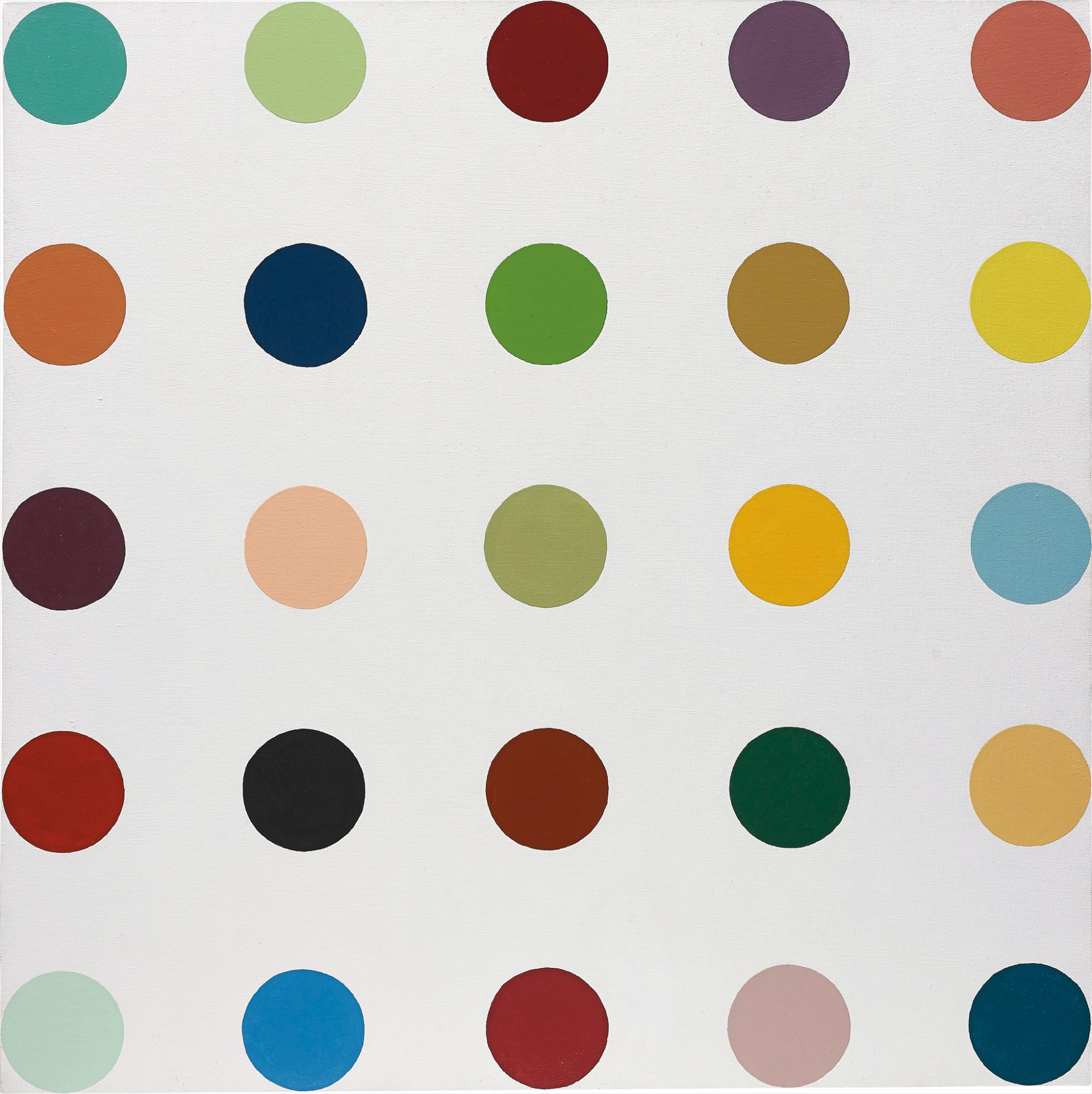
We need to think about the rhythm of a period; this is hard to think about, as the solid dot that is the period would seem to have no rhythm of its own, whereas those oars which carry us as the current flows, commas, would seem to have rhythm as part of their intrinsic character—for what is an “oar” which requires some dash-like prompt to move it, if not a real (b)ore?
It seems sodden there. Lain down. Bereft, even. Featureless. An it. That small dot, like a planet before the adage is finally inscribed upon the heart, or like spring grass gathered into a clump that holds, anchoring slender blades to the rest of the paragraph, as the paragraph to the page. So that which floats above, has some play, even some momentum against its fastener.
That it might be like an artless hull, deceased at the bottom of the ocean, the pin pinned to the seafloor by the immensity of atmospheres, the shuttering close of the close of a breath. That dark darkness as of a shitty iron public sculpture.
How does one make a stone less solid which has sunk to the bottom of a lake? How does one muster the might to haul an anchor up with no chain? How can the hoof-taps which pass over before the animal hide has been stretched over the drum still resound?
More formally, because they so typically have been ingested at the sublime ends of declarative sentences (they do so remind of those three words), they have the flavor of chewed cud, the compressed bolt of the assertion that initiated them, that brought them into being by no less than the knowledge of the mind who had a point to make, the flesh hanging off the bone of contention if only a mangy hound is willing to sniff around those other crude passengers of punctuation meant to stir the pace of thoughts but were, strictly speaking, unnecessary.
For how many of you readers read aloud, pausing over commas, like breathmarks, pausing slightly more over semicolons sparingly used; on account of the confusion they might cause if meant to signify the connection, yet separation between two distinct thoughts, without distracting too much from the flow. How long do you pause—not to punctuate with the em-dash AI has taught you—but to catch pace with the author, whether they are distance runner at a marathon where you are at a disadvantage, or perhaps a different species entirely—to match the oscillations of the author’s thoughts, concurrent moods, to precisify to yourself the voltage of an idea as it effuses through each sentence, until endstop.
How then to follow the writings of a philosopher like Kierkegaard, whose imagined personae dip from such different streams of consciousness, if everything to the eye seems one and many flowing rivulets unbothered by the need to differentiate such selves as are not worth saving? Kierkegaard at one point compares people to parts of speech:
All of human life could well be conceived as a great discourse in which different people come to represent the different parts of speech (this might also be applicable to nations in relation to each other). How many people are merely adjectives, interjections, conjunctions, adverbs; how few are nouns, action words, etc.; how many are copulas.
People in relation to each other are like the irregular verbs in various languages—almost all the verbs are irregular.
March, 1836
Then, are punctuation marks more like institutions which, aside from the rules of grammar, help ensure that a part of speech, or person, plays its role effectively; or are they perhaps more like other people, people overlooked, people who become visible only once you shine a light on them, but without whom coherence falls apart?
Would you rather live your life out as a noun or verb? –Can I be a place name? Can I be ‘to be’? Even so, imagine living as a verb through the change of one language as it is incorporated into the next, how you begin, gradually, to roll off the tongue differently, how what was hard is now soft, what touched the mouth’s rooftop now does not; even existence comes to feel differently said. Yet as a place name to see your friends die around you, though it takes centuries to witness transformations—perhaps to acquire a whole new definition, a whole new lookup on life, then to sound quaint, before dying at the hands of name-changers whose own monuments will yet spawn more names whose own name-changers’ monuments will yet erode in time.
To be instead a member of that powerless underclass which makes life meaningful for each successive nameless one.
Now that I think about it, it is somewhat limiting. Why not introduce ‘,,’ to mean a kind of doting, a loving caress of the clause which follows it,, as ‘with’ follows ‘is’,, to mark off that you have been left in very careful hands? Would the same be signified if ‘,’ instead separated the clause, so that you were meant (deceptively) to feel the rhythm of its breath? What if breaths are not thoughts? What if there is no time to think when you must always work for sake of the unknown other? For that matter, why not introduce ‘..’ for those times when you, given the sentence you were given, have felt so spiritually drained that you are beyond having nothing to say, having lost the will to say. A semi-colon could then mean a stifled thought of hope, if contained in the sentence therein.
But beyond the people necessary for what we call the world—not its figureheads—one wants to know what is necessary to the meaning of a sentence—how if it has an underlying logic can it be well-formed? Well-formed like what, a juicy baby leg? When we are talking about the mechanism of how thinkers write, we find the idea that the punctuation mark is deployed (or not) in the interest of style. Imagine a complete pattern of punctuation marks could be drawn up from the novels of such different writers as Tolstoy and Miller, Hemingway and Pessoa, and displayed visually, so that at a glance we could take in thousands of individual marks without reference to the intervening text, could we not then tell at a glance how different the resulting styles would be, even if we didn’t know the authors’ work in advance? I think it would be no different than seeing the tracks of an elephant versus a human ‘being’, a tiny person versus a more grandiose sort.
In a famous passage William James writes of the paces of various portions of the stream that is consciousness:
Our mental life, like a bird's life, seems to be made of an alternation of flights and perchings. The rhythm of language expresses this, where every thought is expressed in a sentence, and every sentence closed by a period. The resting-places are usually occupied by sensorial imaginations of some sort, whose peculiarity is that they can be held before the mind for an indefinite time, and contemplated without changing; the places of flight are filled with thoughts of relations, static or dynamic, that for the most part obtain between the matters contemplated in the periods of comparative rest.
I think James means by ‘places of flight’, e.g. those marks by which the author doesn’t mind if his own point wanders…ellipses being the best example’; but in certain contexts the semicolon can be deployed this way, that makes the passage comparably restless, as is the case above.
Because birds so often go their own way, and no two are alike, neither are their flights or perches, or the way they build their nests, whether oversized or concise, hidden or obvious, some with a false door intended for predatory birds. I’ve known, for example, several philosophers who frontload their articles with innumerable distinctions not all of which are relevant to their argument. I’ve known others to lay their eggs in another bird’s nest, kind of like C.S. Peirce, the cuckoo. But even more so than birds, rivers have style, some flow straight into the ocean, some meander, cross the delta or flood the plain, some drown the reader with density like a dam has just broken and pushed its will out onto the world. If a period is time for sensorial reflection, perhaps a comma’s occurrence is the sound of a voice driving you onward, or a bereft mother calling you home, or the way you check your own pulse while running or pinch yourself in a dream, to remind yourself you’re still living, you’re still here, this exact impulse to be here best conveyed in short bursts, before the period at which point you are fatigued, by the comma.
The transitive part of conscious roving tends towards substantive.
James is not the only one who sensibly links periods and semicolons to the idea of conscious rest. Lewis Thomas writes:
You cannot hear them, but they are there, laying out the connections between the images and the ideas. Sometimes you get a glimpse of a semicolon coming, a few lines farther on, and it is like climbing a steep path through woods and seeing a wooden bench just at a bend in the road ahead, a place where you can expect to sit for a moment, catching your breath.
For me, this says more about the comma, though. They are the glimpses of the rest yet to come. The semi-colon is less a lookout point where you reflect on your experience so far (that, after all, would require sitting on the bench, maybe mindlessly checking your phone, then getting up again for the next passages—all too much like a period), and more like an extended comma; or a difficult point you’ve reached along your climb up the path, where you had better place your foot in the foothold, so that you don’t slip and find yourself with a different view of the panorama.
Then you can catch your breath.
While James is focused on the grammar of a single stream of consciousness in its complexities, Adorno writes of punctuation as belonging to the interplay between author and reader, one that: ‘…takes place in the interior of language, along its own pathways. Hence it is superfluous to omit them as being su-perfluous: then they simply hide. Every text, even the most densely woven, cites them of its own accord-friendly spirits whose bodiless presence nourishes the body of language…’
I think the ‘bodiless presence’ here is nothing more than the prior understanding of the significance of an author’s punctuation—that aspect of their style—which is necessary for understanding what they mean, at least on some plausible interpretations. As Kierkegaard notes: “Abstract, grammatical punctuation just isn't good enough when it comes to rhetorical writing, particularly when spiced with irony, epigram, subtlety and, in the ideal sense, malice, etc.” It is similar with music. If there is a rest, or a crescendo, or fermata, or particular bar that is the coda, if there happens to be a trill written just for the piccolo to soar for a moment above the rest of the arrangement of the march that ends with an exclaiming bang—they must be respected! Yet can be respected by quite different readers conducting the interpretation of the text. So that we could envision a conductor who is inconsistent in his interpretation of the score as being like the writer who has yet to find his voice, regardless of his particular subject matter. The ancient Confucians would have called it ‘submitting to li’, the sincere expression of one’s role through ritual, where here the rituals are stabbings at a genre. I don’t believe punctuation would hide if omitted; it rather seems to me inextricably linked to its characteristic expression, its visible representation of the author’s ritual use. If received to us as a wall of unpunctuated text Hamlet’s monologue would be parse-able, a product of our concerted oral efforts, yet just when to vent and when to feign self-pity, the subtler choices might not appear to us as possible emotive options, if not for the punctuations already afforded by the protean one, Shakespeare.
and if punctuation hides what should we say about the wall of unpunctuated text intended to be just that a wall of unpunctuated text whose punctuation would have only the effect of muting itself by revealing to the reader hidden Cabalistic meanings since if punctuation can be hidden so can the significance of numbers be manifested
But no one wins an argument with Adorno.
If punctuation is a vehicle of the stream of consciousness, as is seen in James and complicated by Adorno, then it is also more than style, it is means of control, it can be appropriate, or it can be overwhelming, it can make too little of a concession to the reader—that it enjoin the reader’s consciousness to its author’s—or it can compromise too much. As Nietzsche elaborates:
Rhythmical Sacrifice. Good writers alter the rhythms of many a period merely because they do not credit the general reader with the ability to comprehend the measure followed by the period in its first version; thus they make it easier for the reader, by giving the preference to the better known rhythms. This regard for the rhythmical incapacity of the modern reader has already called forth many a sigh, for much has been sacrificed to it. Does not the same thing happen to good musicians?
In Nietzsche’s time I suspect the ‘better known rhythms’ which bore the mark of the incapacity of the ‘modern reader’ were the rhythms set by popular journals (N. rails against them in his work on education). In our time the ‘better known rhythms’ are the ones that are the product of gpt fed on huge amounts of grammatical and punctuation data, which means a smoothing out of idiosyncratic rhythms, and with more and more content produced by gpt for gpt to be trained on, and in turn train humans to sound just like, myself and other creative are collectively breathing our own sigh, as it heralds a grammatical monoculture. One wonders, if punctuation affects rhythms, and rhythms affect pace, and the pace of the passage affects understanding, then wouldn’t the AI-induced tendency towards uniformity of punctuation suggest a tendency toward uniformity of understanding?
A dumbing-down, probably not a smartening-up, if you also assume (as seems clear) an overall lack of critical thinking, which begins in the capacity for independent thought. So says the pamphleteer in me. But I suppose if you must, you can live in the inexhaustible rhythms of previous generations of thinkers; you can in the fashion of memento mori retain as a form of dignity, solidarity with the dead, knowing that one day your own work will sound as old, outdated, unfashionable, irrelevant, random, unintelligible, quaint, maybe even sentimental.
Maybe future generations where AI speech dominates will simply be incredulous that anyone could meaningfully reflect to such an extent about, for instance, the length of a dash. They may ask whether it adds anything at all, hidden or otherwise, to the content of Kierkegaard’s intimate desire, which he expressed as only he could:
I have just come back from a party where I was the life and soul. Witticisms flowed from my lips. Everyone laughed and admired me—but, I left, yes, that dash should be as long as the radii of the earth's orbit ——— and wanted to shoot myself.
Works Cited
Adorno, Theodor W. “Punctuation Marks.” Notes to Literature: Volume 1. Edited by Rolf Tiedemann, translated by Shierry Weber Nicholsen, Columbia University Press, 1991, pp.15-18.
Coleridge, Samuel Taylor. “To Sara Hutchinson.” Sept. 1802. Collected Letters of Samuel Taylor Coleridge, Vol. II: 1801-1806, edited by Earl Leslie Griggs, Oxford University Press, 1956, pp. 860-862.
James, William. The Principles of Psychology. Vol.1, Henry Holt and Co., 1890.
Kierkegaard, Soren. Kierkegaard’s Journals and Notebooks, Volume 1: Journals AA-DD. Edited by Niels Jorgen Cappelorn, et. al. Translated by Alastair Hannay. Princeton: Princeton University Press, 2007. (Entry 1 A 75).
_______________________.Journals and Papers. Edited and translated by Alastair Hannay, Penguin Books, 1996. (1836-04, 1 A 161).
Nietzsche, Friedrich. The Gay Science: With a Prelude in Rhymes and an Appendix of Songs. Translated by Walter Kaufmann, Vintage Books, 1974, p.165 (for aphorism 129).
Thomas, L. (1979). “Notes on Punctuation.” The Medusa and the Snail: More Notes of a Biology Watcher, Viking Press, 1979, pp.103-106.
David Capps is an author and philosophy professor based in Connecticut.