
Poems
Commerce
for DEP
Late morning in winter, and I have one of our old mentor’s masterful books in hand. Sirens rupture the silence on Tremont St, but I work to stay within and between the lines, resisting first the urban drama out the window, then the impulse to text you a photo of every masterstroke, and a cry for help: What if our own lined, rhymed ambiguities, I’d write, poured over in our weekly writer’s group, are only marks made saying return here, work is to be done here, and it’s undone still? I might write that. Or, too lazy or pressed for time, send a mind-blown emoji captioned: Hey, have you ever written a single word? I think of our poems, the way we make our ending— your brute, stark images, my pretentious flourish— to bring the whole together. Maybe we just leave them off, each an abandoned child at a firehouse door, the would-be hero having knocked and walked away, satisfied he’d done something to secure future life. Kill your babies is how I once misquoted the well-worn dictum in a workshop, back in grad school, in the days we believed we’d accomplish something in this art. (Did we actually? Believe, I mean.) In the classroom that day, a ripple of laughter and uncomfortable shift (one of our classmates having just presented a poem about getting an abortion). Darlings you said, blinking, blade unsheathed, taking the opportunity to get back at me for listing “Suggestions for Further Reading” at the bottom of each marked-up draft.
*
Cold and gray outside, and the streets are quiet. I’m finished with reading. Why not make the masterpiece a cause for hope? An equally rational response to good work, but just now the light isn’t quite breaking through. Maybe it’s just that time of day, the rush of morning worn off, the last coffee drained, when what seemed a big idea just moments before fades to a vague, illiterate reverie, then distraction. A single word, just one, would suffice, we like to joke, and I believe, in some moments, I could do it— until, of course, I see the next masterpiece crafted with a measured hand, not one word wasted, and all clarity, which is to say all light of a living intellect feeling through language to discover, to make experience. Or something like that— I’m not sure I would know, to be honest, the real thing if I saw it (you might). We both like to plead for someone to pay us just to read the masters, as Walcott once wished, wondering if he should abandon the quiet snail’s journey of the art, and be content to describe the heart’s shuddering before a page not his own, though dependent on his gaze— keenly attuned, but infamously lecherous too (hypocrite reader, my likeness, my brother)— dependant, we believe, on minds like ours that, we’re sure, see beauty everywhere, and so are owed this art, as if it worked that way.
*
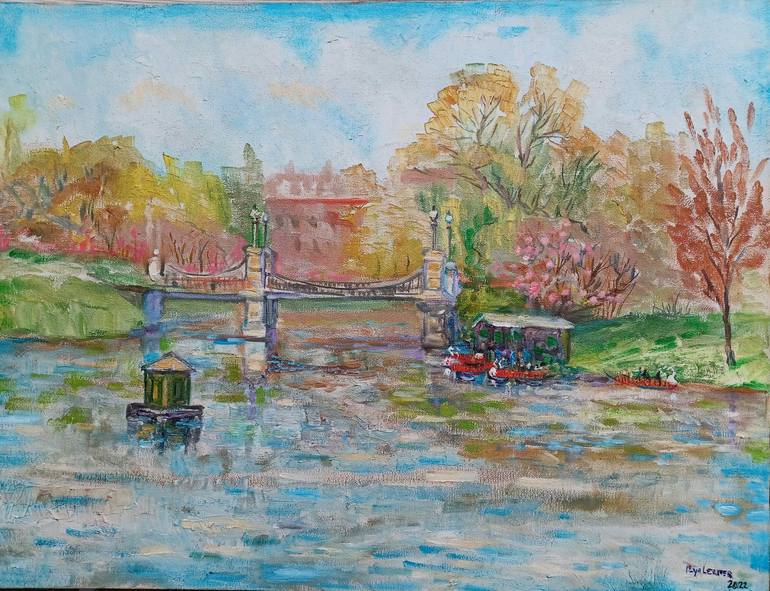
Winter sun has split the gloom, momentarily. One beam reflected off the distant Hancock Tower lights the overturned book, on the coffee table. It’s slim shape recalls a doodled bird, a bracket. An image worth sharing? What is made, remade of experience with it? I think of a summer day—close to sunset, walking with you around Jamaica Pond. Our worn, febrile attentions flitted, alighting in one moment on a monumental oak— the vines hugging its trunk incorporated, uncut, so that we ecstatically proclaimed it divine— then darting to a vision of jeweled flesh sunning gracefully on a nearby slope in the late light: a stranger’s legs lifted at a right angle, a band of belly visible. It’s all it took to shift our reverie to vague neoclassicism: a nymph in the woods, etc, doing our best not to reduce her to a commonplace. On a bench after breathless wonder, we reflected that we had covered Nature and Love, and so excused the interruption. Almost the holy trinity of poetry, I said. This is still the work, you said, and asked, What’s the third? What fills out the list? and we ranged wide in half-thought-out answers, settling at last on something like commerce, though the thoughts, steady, slowing as twilight came on, and the sunset reflected on the water called for a photo, and we turned to the omnipotent, everpresent phones, to share a scene in electroluminescence— all these forms we hope might make a beginning might make an ending of this art.
Matthew Porto is an Italian-American poet from Long Island, NY. He holds a PhD in English from Texas Tech University and an MFA in poetry from Boston University.